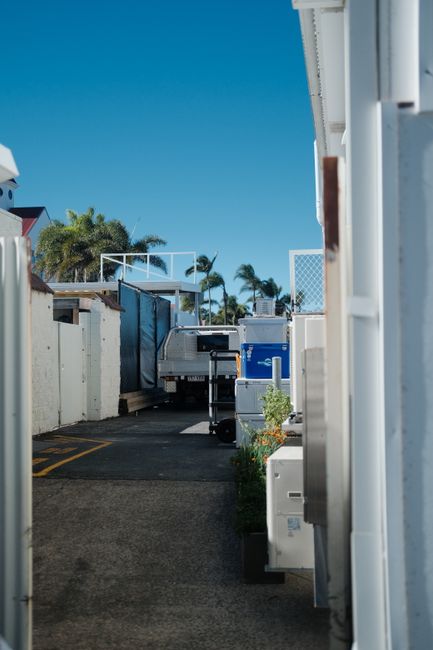
Narrow access gardeners Kingston what to know before booking
If you have a side passage, tight rear entrance, shared alley, or a garden that seems to have been designed by someone who disliked wheelbarrows, you are not alone. Booking narrow access gardeners Kingston what to know before booking can save you time, money, and a fair bit of frustration. The key is simple: make sure the team knows exactly how they will reach the garden, what they can carry through, and whether the job needs extra planning for waste removal, machinery, or safety. In Kingston, that can make the difference between a smooth visit and a day of "we'll just have to improvise".
This guide walks through what narrow access means in practice, how it affects quotes and job planning, the common traps to avoid, and the practical questions to ask before you book. It is written to help you choose confidently, whether you need hedge trimming, lawn care, garden clearance, or a broader tidy-up.
Why narrow access gardeners Kingston what to know before booking matters
Narrow access changes how garden work is planned from the very first conversation. A standard garden visit might be straightforward: drive up, unload tools, get to work, and leave with waste. But if the only route is through a side gate, shared path, basement steps, or a passage that is barely shoulder-width, the team has to think differently. That affects equipment choice, labour time, waste handling, and even whether a task is sensible on the day.
To be fair, many issues only become obvious once somebody actually stands in the garden with a trolley and a hedge cutter. But you can avoid most surprises by sharing access details early. In practice, the gardener may need to use smaller tools, carry waste in sacks by hand, bring compact machinery, or schedule extra time for moving materials through the property.
This matters most in Kingston where homes can vary a lot. Some have neat front access and generous lawns; others have old terraces, tight side returns, or awkward shared entrances. A job that looks simple from the kerb can be a bit of a puzzle once the team starts moving bags, branches, or turf. The better the access information, the better the quote and the better the outcome.
Expert summary: narrow access is not a minor detail. It influences what can be done, how safely it can be done, and whether the price you receive is realistic. Share the access constraints early, and be specific rather than vague.
If the work is part of a wider tidy-up, it can also help to review related options such as garden maintenance, garden clearance, or services overview so the visit is planned as one joined-up job rather than several disconnected tasks.
How narrow access gardeners Kingston what to know before booking works
The process is usually more practical than dramatic. First, you explain the layout of the garden and the access route. Then the gardener decides whether the job can be completed safely with standard tools, compact equipment, or a more manual approach. If needed, they may ask for photos, measurements, or a quick site visit. That is not fussiness. It is just good planning.
Here is what usually happens behind the scenes:
- Access is checked. The gardener wants to know gate width, step height, surface condition, and whether there are tight corners, low arches, or locked shared areas.
- The task is matched to the access. A simple hedge trim may be perfectly doable. A large clearance with heavy green waste might need a different setup.
- Equipment is chosen. Smaller mowers, hand tools, compact cutters, folding wheelbarrows, or bagged waste handling can all make narrow access jobs more efficient.
- Time and labour are estimated. Narrow access often slows down movement. That does not mean the job is difficult in the gardening sense, just more time-consuming.
- Waste disposal is planned. Branches, clippings, soil, and rubble need to leave the site somehow. That is often where the real logistics sit.
In some cases, the biggest issue is not the garden work itself. It is the journey in and out. You might have a lovely small courtyard that could be transformed in an afternoon, but if every bag of waste has to be carried through the house, the job needs a different plan. That is why photos are so useful. A few clear pictures in daylight can tell a gardener more than a ten-minute phone call.
If trees are part of the work, narrow access becomes even more important. Larger branches, awkward drops, and cutting positions can complicate things. In those cases, it may be sensible to explore tree lopping and removal alongside the access discussion, rather than assuming the job can be handled the same way as a normal trim.
Key benefits and practical advantages
When a narrow access job is planned properly, the benefits are very real. The garden gets improved without unnecessary damage, the visit runs more smoothly, and you avoid paying for wasted time. Honestly, it is one of those situations where a bit of prep makes everything feel calmer on the day.
- More accurate quotes. Clear access details help the gardener estimate labour and waste handling properly.
- Less disruption. A team that knows the route can protect floors, walls, gates, and planting better.
- Safer work. Tight spaces need sensible lifting, tool handling, and movement planning.
- Better results in smaller gardens. Compact spaces often benefit from specialist pruning, mowing, and clearance methods.
- Fewer surprises. Nobody enjoys discovering that the mower will not fit through the gate halfway through the visit.
Narrow access can actually be an advantage, oddly enough. Small gardens are often quicker to tidy once the route is sorted, and the visual improvement can be striking. A cramped passage may feel like a nuisance, yet it also forces a more careful, more deliberate approach. That can lead to cleaner lines, less plant damage, and a finish that looks better than a rushed job in a larger space.
For ongoing upkeep, a planned schedule can be especially helpful. Regular visits for lawn mowing, hedge trimming, or general garden maintenance often work better than leaving everything until it becomes a bigger access challenge.
Who this is for and when it makes sense
This service is for anyone whose garden cannot be reached easily with standard equipment. That includes terrace houses, basement gardens, properties with side returns, homes with narrow rear access, and places where waste needs to be carried through a limited route. It is also relevant if the garden itself is small but the entry point is awkward. The access problem and the garden size are not always the same thing.
It makes sense to book a narrow access specialist when:
- the gate or passage is too narrow for standard garden machinery;
- the route includes steps, uneven paving, or steep changes in level;
- waste has to be moved through a restricted internal or external path;
- there are shared or sensitive access points that need careful handling;
- the job involves heavier clearance, pruning, or moving bulky materials;
- you want to avoid damage to narrow entrances, fences, paving, or interiors.
Sometimes people hesitate because they think their garden is "too small to bother a specialist". But that is often exactly where narrow access planning helps most. A small courtyard with heavy plant overgrowth, for example, can be more awkward than a larger garden with a wide driveway. Go figure.
If the space also needs design improvement rather than just maintenance, it may be worth looking at landscape gardening or landscaping so the access constraints are considered from the planning stage, not as an afterthought.
Step-by-step guidance
If you are booking for the first time, keep it simple. A clear, structured handover prevents most access-related problems. Here is a practical way to do it.
- Measure the route. Note gate width, passage width, and any tight turns. You do not need engineering-grade precision, just useful facts.
- Take a few photos. Include the entrance, the tightest point, the work area, and any stairs or uneven ground. Daylight helps a lot.
- List the tasks. Say whether you need mowing, hedge cutting, clearance, pruning, bed tidying, or a mixed job.
- Describe waste movement. Explain where waste must pass through and whether bags can be left near the exit point.
- Be honest about obstacles. Locked gates, shared access, pets, fragile paving, awkward parking, or low lighting should all be mentioned.
- Ask what equipment will be used. A good gardener will tell you if compact kit or manual handling is likely.
- Confirm timing and duration. Narrow access often means extra handling time. Better to know that before the day.
- Check payment and terms. Make sure you understand quote structure, waste charges if any, and what happens if access turns out to be different from described.
That sequence sounds basic, but it works. The people who get the smoothest results are usually the ones who send the unglamorous details up front. The gate that sticks. The step that wobbles. The alley where two people cannot pass. Those little facts matter more than a polished description of the lawn.
For heavier clearance jobs, a service like garden clearance is often the right starting point, while more regular upkeep may be better handled through garden maintenance or a broader seasonal plan.
Expert tips for better results
Here are the details that tend to make the biggest difference in narrow access work. Not flashy stuff. Just the things that save time and avoid awkward moments.
- Use daylight for access checks. What looks passable at 8am in the grey can feel much tighter later in the day when shadows hide bumps and dips.
- Keep the route clear before arrival. Move bins, toys, hose pipes, plant pots, and anything else likely to snag equipment.
- Tell the gardener where they can stage waste. A small holding point near the exit can make the whole job run faster.
- Ask for a plan for delicate surfaces. If you have narrow paving or indoor routes, the team should know whether mats, boards, or careful lifting are needed.
- Think about parking as well as garden access. Sometimes the shortest route through the garden is not the easiest route to the van.
- Book slightly more time than you think you need. Narrow access rarely makes a job impossible, but it can add minutes that soon become hours.
One small but useful habit: keep a quick note on your phone with the width of the tightest point and a couple of photos. The next time you need work done, you will not have to re-measure in the rain while holding a tape measure and muttering at the gate. We have all been there.
If your garden includes hard landscaping elements like sleepers, raised beds, or decking edges, mention them early. A team offering decking services or broader landscaping may need to think through the route differently, especially where materials are being moved in or out.
Common mistakes to avoid
A few avoidable mistakes crop up again and again with narrow access bookings. They are easy enough to fix, but only if you know to look for them.
- Underestimating the access issue. "It should be fine" is not a plan.
- Not sharing photos. A few images usually prevent a lot of back-and-forth.
- Forgetting about waste removal. Even a small job produces more clippings than people expect.
- Assuming standard equipment will fit. A mower or wheelbarrow that works elsewhere may be useless here.
- Leaving barriers in place. Locked gates, parked bikes, or stacked materials can quickly slow everything down.
- Mixing up access and labour complexity. A simple task through a difficult route may still take longer than a more complex task through open access.
There is also the classic mistake of not checking whether the job is one-off or repeat maintenance. If your garden needs regular attention, a tailored plan can be more efficient than repeated emergency tidy-ups. That is especially true for narrow spaces where every visit involves a bit of choreography.
Practical rule: if you are hesitating over whether the access is "narrow enough to mention", mention it anyway. If it turns out not to matter, great. If it does matter, you have already solved the biggest early risk.
Tools, resources and recommendations
You do not need specialist tools as a homeowner, but a little preparation helps a lot. The most useful things are basic and ordinary.
- Phone photos or a short video. Walk the route slowly and show the tightest points.
- Measuring tape. Gate width, passage width, and step heights are the main ones.
- Notepad or phone notes. Keep access details together so you do not have to repeat them.
- Clear path markers. If there are delicate beds or obstacles, point them out before work starts.
- Bin bags or waste sacks. Useful if you need clippings moved in stages rather than all at once.
From a service perspective, it helps to check the company's operational approach as well as the gardening task itself. Pages such as about us, pricing and quotes, and insurance and safety can give you a better sense of how the work is organised and whether the business takes site planning seriously.
If you are comparing providers, look for clear explanations rather than vague promises. Good narrow access work is usually about thoughtful preparation, not fancy sales language. Straight answers beat slick talk every time.
Law, compliance, standards, or best practice
For most homeowners, narrow access gardening is not about complex legal issues. Still, there are sensible best practices worth following. In the UK, anyone carrying out garden work should think carefully about safe movement, trip hazards, manual handling, and preventing damage to property. Where waste is involved, it should be handled and disposed of responsibly. If the work includes tree-related tasks, extra care is needed because the risks rise quickly with height, weight, and cutting position.
Best practice usually includes:
- Clear communication before arrival. The team should know the route, obstacles, and any sensitive areas.
- Safe lifting and movement. Narrow passageways increase strain and the risk of knocks or trips.
- Appropriate insurance. It is sensible to choose a provider that is comfortable discussing cover and safety arrangements.
- Respect for property and access rights. Shared entrances, communal paths, and neighbouring boundaries should be treated carefully.
- Waste handled responsibly. Green waste should not be dumped in a way that creates avoidable mess or hazards.
It is also worth checking operational policies if you want an extra layer of reassurance. The website pages on health and safety policy, complaints procedure, payment and security, and recycling and sustainability show how a business thinks about responsibility beyond the job itself.
And yes, even in a small garden, a sensible process matters. A clean route, a careful carry, and a tidy finish. That's the lot, really.
Options, methods, or comparison table
Different narrow access jobs call for different approaches. The best choice depends on the route, the type of work, and how much material has to be moved.
| Approach | Best for | Pros | Limits |
|---|---|---|---|
| Standard garden equipment | Access that is narrow but still fairly open | Fast, efficient, familiar | May not fit through tight routes or steep steps |
| Compact or smaller tools | Courtyards, side returns, smaller lawns, light trimming | Flexible, easier to move, less disruptive | May take longer on larger jobs |
| Manual carrying and bagged waste | Very tight passages or shared access | Controlled, practical, safer in cramped spaces | Labour-intensive and slower |
| Phased clearance | Overgrown spaces with difficult routes | Reduces congestion, easier waste handling | Can require more than one visit |
There is no single "best" method. A tidy hedge trim through a narrow path might be perfectly straightforward, while a full clearance with wet waste and thorny branches may need a slower phased approach. The smart move is to match the method to the access rather than forcing the access to suit the method.
Case study or real-world example
A typical Kingston scenario goes something like this. A homeowner has a small rear garden behind a terraced property. The front door is fine, but the side passage is tight, the gate opens inward, and there is a slight turn before the back area. The garden itself is not huge, but it has a patchy lawn, a hedge that has grown a little wild, and several bags of clippings that will need to come out through the same route.
On paper, it sounds like a quick job. In reality, the access means the team needs to avoid larger kit, keep the route clear, and plan the waste movement carefully. Photos taken in advance show a narrow corner and a low wall that could catch a wheelbarrow. Once that is known, the job becomes much easier to plan. Smaller tools are used, waste is bagged in stages, and the work is completed without damage to the path or nearby planting.
The difference is not magic. It is just good information. The homeowner avoids the stress of a last-minute reshuffle, and the gardener avoids turning up with the wrong kit. Everyone wins, which is rare enough in life to be worth noticing.
This kind of planning is especially useful when the work includes routine mowing or hedge tidying on a regular cycle. That way, the garden never gets so overgrown that the narrow access becomes a bigger headache than it needs to be.
Practical checklist
Use this checklist before you book. It is simple, but it catches the things people forget most often.
- Measure the narrowest gate or passage.
- Take photos of the access route in daylight.
- Show any steps, slopes, or sharp corners.
- List all jobs needed in one message.
- Explain how waste will be moved out.
- Mention fragile paving, paintwork, or indoor routes.
- Tell the gardener about locked gates or shared access.
- Confirm whether parking or unloading space is limited.
- Ask if compact tools or manual carrying will be needed.
- Check quote details, timing, and any access-related conditions.
- Decide whether this is a one-off tidy-up or ongoing maintenance.
- Make the route as clear as you can before the team arrives.
Quick takeaway: if the job is simple but the access is awkward, treat the access as the main project. That mindset usually saves time and gives better results.
Get a free quote today and see how much you can save.
Conclusion
Booking narrow access gardeners in Kingston is really about reducing uncertainty. Once the access route is clear, the rest of the work becomes much easier to plan: the tools, the timing, the labour, and the waste removal. That is why what to know before booking matters so much. A few measurements, a couple of photos, and a candid description can turn a potentially awkward job into a straightforward one.
If your garden is tight, shared, stepped, or just a bit awkward, do not wait for the gardener to discover it on arrival. Share it early, ask sensible questions, and choose the approach that fits the space rather than fighting it. The result is usually calmer, cleaner, and better value. And honestly, a garden that feels easier to use after a careful visit has a way of making the whole house feel lighter too.
Frequently Asked Questions
What does narrow access mean for a gardener?
Narrow access means the route into the garden is restricted in some way, such as a slim gate, tight passage, steep steps, shared alley, or awkward corner. It affects what equipment can be used and how waste is moved.
Should I mention narrow access when asking for a quote?
Yes, absolutely. It helps the gardener price the job properly and avoids surprise delays on the day. A quote is only useful if it reflects the real access conditions.
Do gardeners need photos before booking a narrow access job?
Photos are not always required, but they are very helpful. A few clear images can show tight turns, steps, and obstacles much better than a short description alone.
Can narrow access still work for hedge trimming or mowing?
Usually yes, if the route is manageable and the right tools can be carried through. Smaller tools or compact equipment may be needed, especially for tight or shared entrances.
Will narrow access make the job more expensive?
It can, because extra time and manual handling may be involved. That said, the cost depends on the actual layout, the amount of work, and how much waste must be removed.
What if my garden can only be reached through the house?
That is still workable in some cases, but it should be explained clearly before booking. The team needs to know whether floors, walls, and internal spaces need extra protection.
Is narrow access a problem for garden clearance?
It can be, especially if there is a lot of bulky waste. Clearance jobs often need more planning than regular maintenance because material has to be carried out safely and efficiently.
How can I make a narrow access garden easier to work on?
Clear the route, move obstacles, take measurements, and send photos in advance. If possible, leave a staging area where bags or cuttings can be collected before removal.
Do I need to measure the gate myself?
You do not need to be exact to the millimetre, but a rough width measurement is very useful. The narrowest point is usually the one that matters most.
What if I am not sure whether the access is too tight?
If in doubt, mention it anyway. Good gardeners would rather know about a possible restriction early than find out after arriving with the wrong kit.
Can narrow access still suit ongoing garden maintenance?
Yes, and in many cases ongoing maintenance is the best option. Regular visits can stop the garden from getting overgrown, which makes each visit easier and less stressful.
What should I ask before booking a narrow access gardener in Kingston?
Ask what equipment they will use, how they will handle waste, whether they need photos, and whether the quote includes access-related time. Those four questions cover most of the important ground.